
Rituals
Performance/installation, Safehouse 1 & 2, Peckham, London, 2016
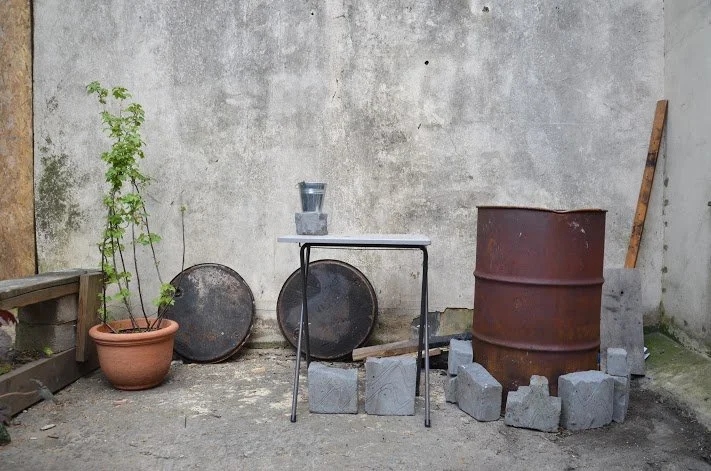

The Location
Rituals was made for the Graduate Diploma Fine Art Offsite exhibition at Safehouse 1 and 2 - two abandoned Victorian houses in Peckham, used as a site - specific exhibition space by Chelsea College of Arts. Students were invited to respond to the specific character of the location: its worn floors, its former domestic life, the particular quality of light and absence that accumulates in a space that has been lived in and left.
Working within the same location, I made two works. Seasons responded to the architecture - an empty room, a window, the silence of objects arranged in a space no longer inhabited. Rituals responded to something the space seemed to call for at a deeper level: the need to mark a threshold, to gather, to release something into fire.
The Work
Rituals was a participatory performance held on the evening of a full moon. The full moon is traditionally understood as a time of culmination - an opportunity to release what no longer serves, what has been holding us back.
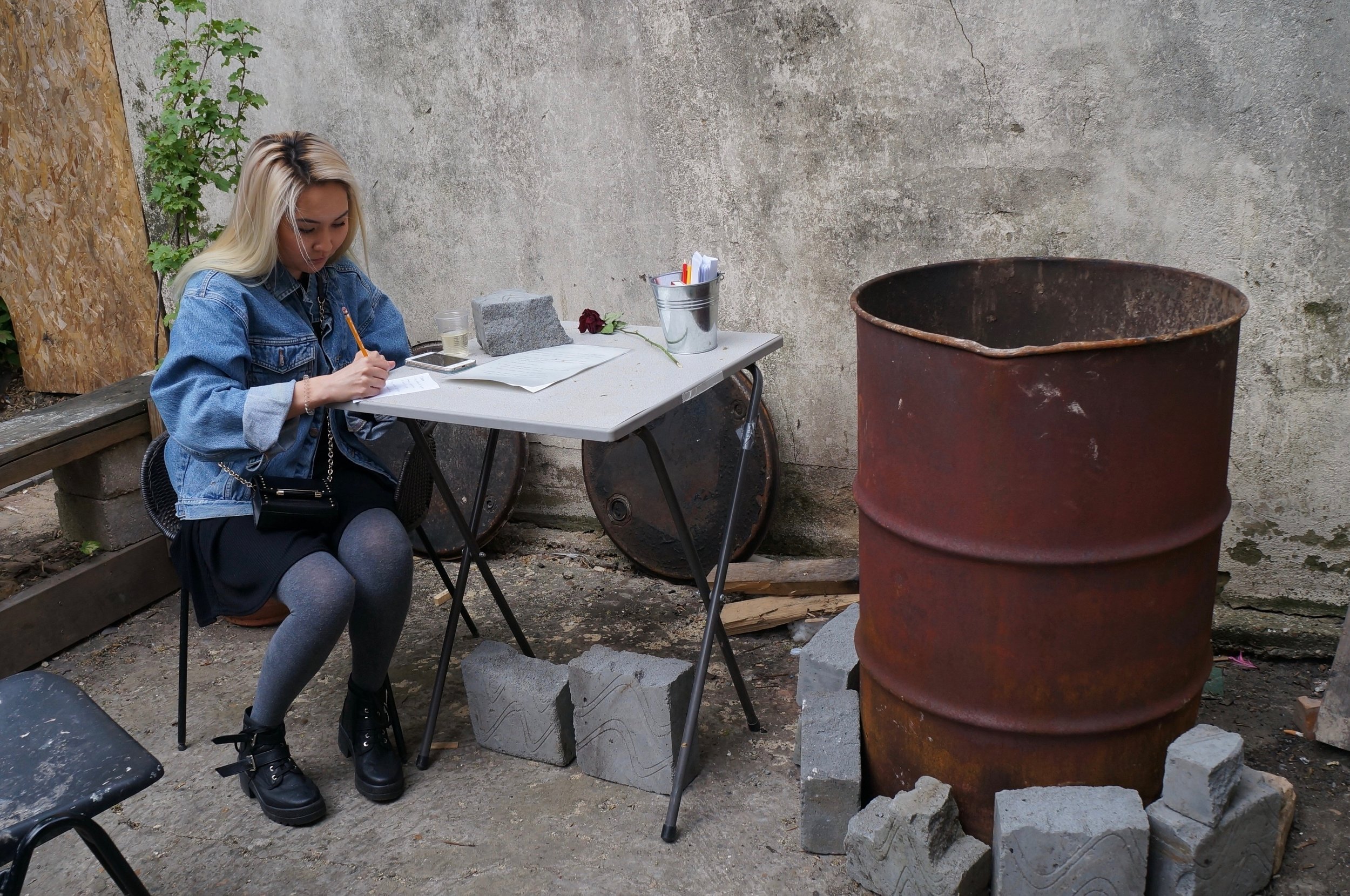
Participants were given a slip of paper and invited to write down anything they wished to release - memories, emotions, thoughts, patterns. The instructions were simple: write, fold the paper in half, and when ready, throw it into the oil barrel. Later that evening, the barrel was lit. Each intention, privately written and folded, was offered to the fire collectively. The act of burning was understood as purification - watching the flames consume what had been written, transforming the material into something that could no longer be held.
The performance was part ritual, part invitation. Nothing was demanded of participants. Some wrote quickly, some sat with the paper for a long time.
The Tradition
Growing up within Daoist traditions, I was familiar with the burning of 紙錢 - joss paper, sometimes called ghost money or spirit money. This is a practice observed across many occasions in the Taiwanese calendar: funerals, the Qingming festival when families visit and tend to ancestral graves, Ghost Month (鬼月), and the birthdays of deities.
The belief underlying the practice is precise: fire transmutes the material into something the ancestors or deities can receive in the spirit world. The paper - printed to resemble gold currency, or fashioned into more elaborate forms such as houses, clothing, and everyday objects - is not destroyed by burning. It is sent. The smoke carries it across a threshold that no living hand can cross.
Bringing this into a Victorian house in London - with an international audience, far from the temples and courtyards where I had first encountered the practice - was not an attempt to recreate the tradition faithfully. It was a recognition that the tradition itself points toward something older and wider than any single culture's expression of it. The act of writing an intention, folding it, and releasing it to fire is not culturally specific. The belief that something can be genuinely let go - that release is possible, that the material can carry the immaterial and then surrender it - is one of the deepest gestures in human experience.
The Dual Nature of Ritual and Performance
Every ritual contains within it an element of performance - a sequence of actions deliberately ordered, witnessed by others, carried out with intention. And every performance, at its most sincere, reaches toward something ritual understands instinctively: that the act of doing something in a particular way, in a particular place, with others present, can change the internal state of everyone involved.
Rituals held this tension openly rather than resolving it. Participants were not asked to believe in anything specific. They were simply invited to write, to fold, to release. Whether the gesture was understood as sincere spiritual practice, as symbolic act, or as something in between was entirely their own - and perhaps shifted as the evening progressed and the fire took hold. There is something about watching flames consume what you have written that makes the distinction between belief and performance feel less important. The release happens regardless.
This is what the Taiwanese tradition of burning 紙錢 also understands: the ritual works not because everyone present holds identical beliefs, but because the shared act of attention - gathered around fire, watching something transform - creates a collective experience that exceeds any individual's private conviction or doubt.
Fire
Fire was chosen not as symbol but as material - the primary medium of the work. Like paint or textile or sound, it had its own properties, its own behaviour, its own demands on those who came near it.
A fire cannot be rushed. It requires preparation, attention, the right conditions. Once lit, it takes over - it is no longer directed but simply tended. This quality of surrender, of handing something over to a process that cannot be controlled once begun, was central to what Rituals asked of its participants. The act of throwing the folded paper into the barrel was the last moment of agency. After that, the fire decided.
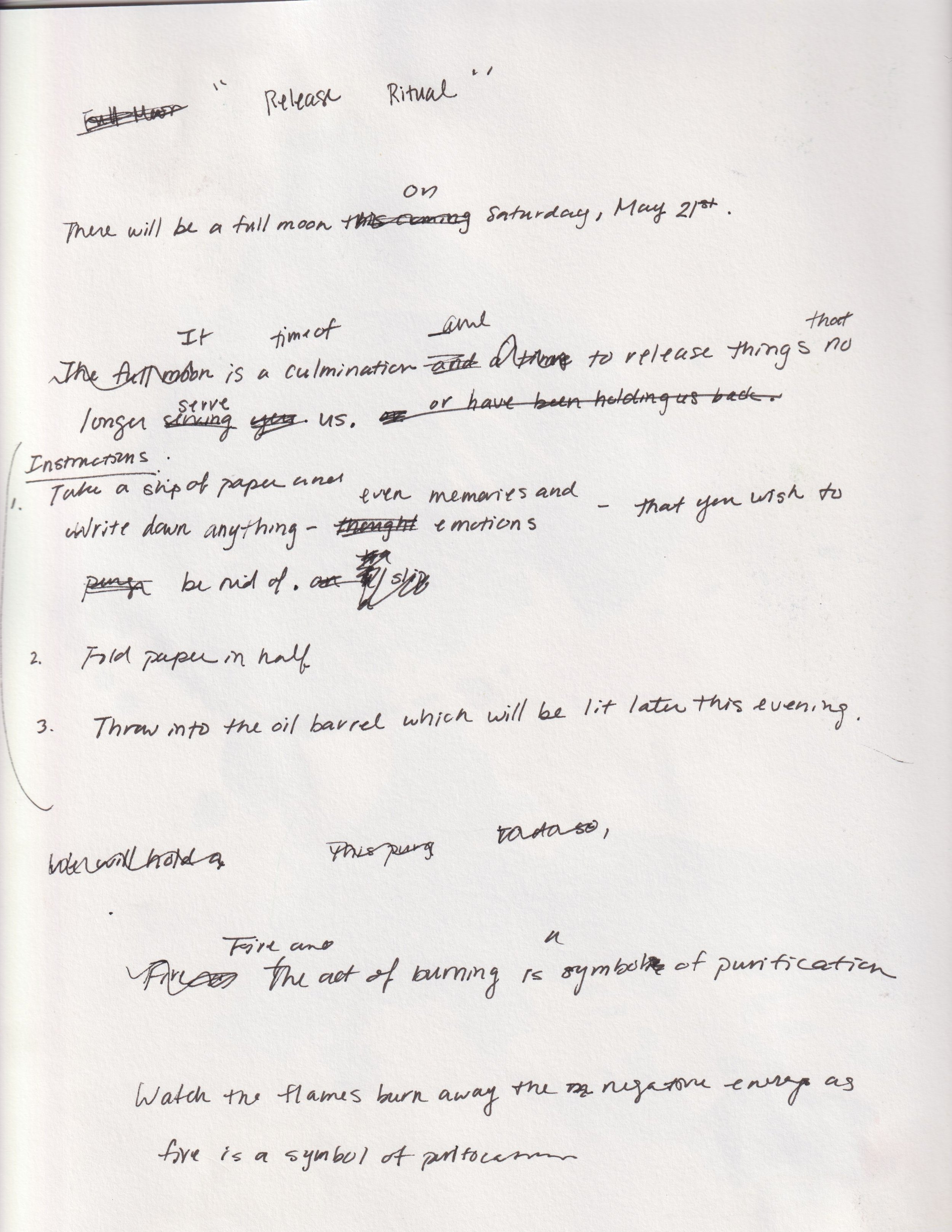
Participant instructions, handwritten notes, 2016